

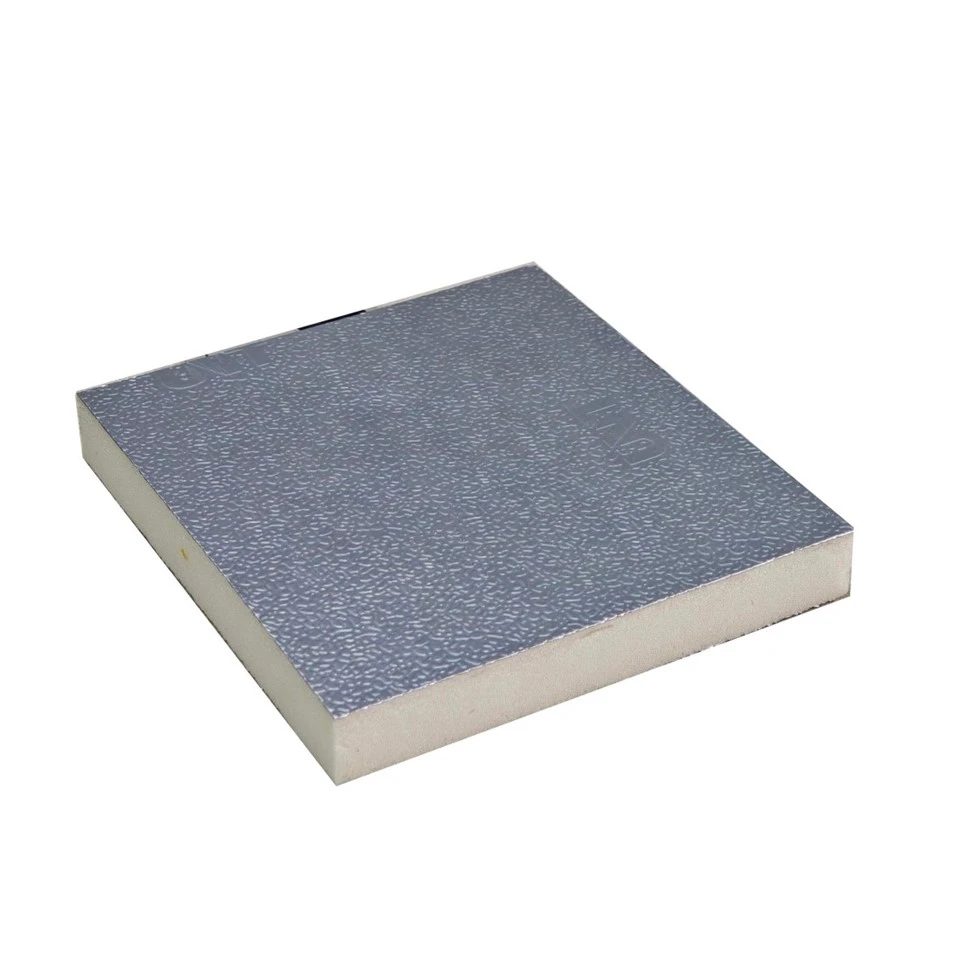


Thanks to its excellent products and quality services, UNT Duct is one of the leading pir insulation sheet manufacturers and suppliers in China. Welcome to buy the high quality and customized products from our factory. We will offer you the best service and fast delivery.
PIR Insulation Sheet
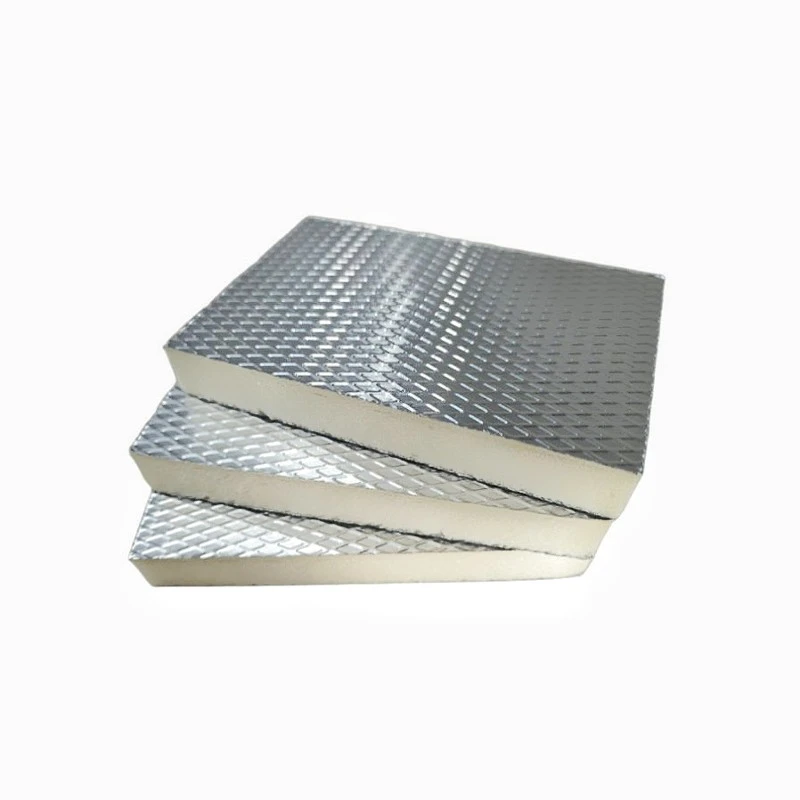
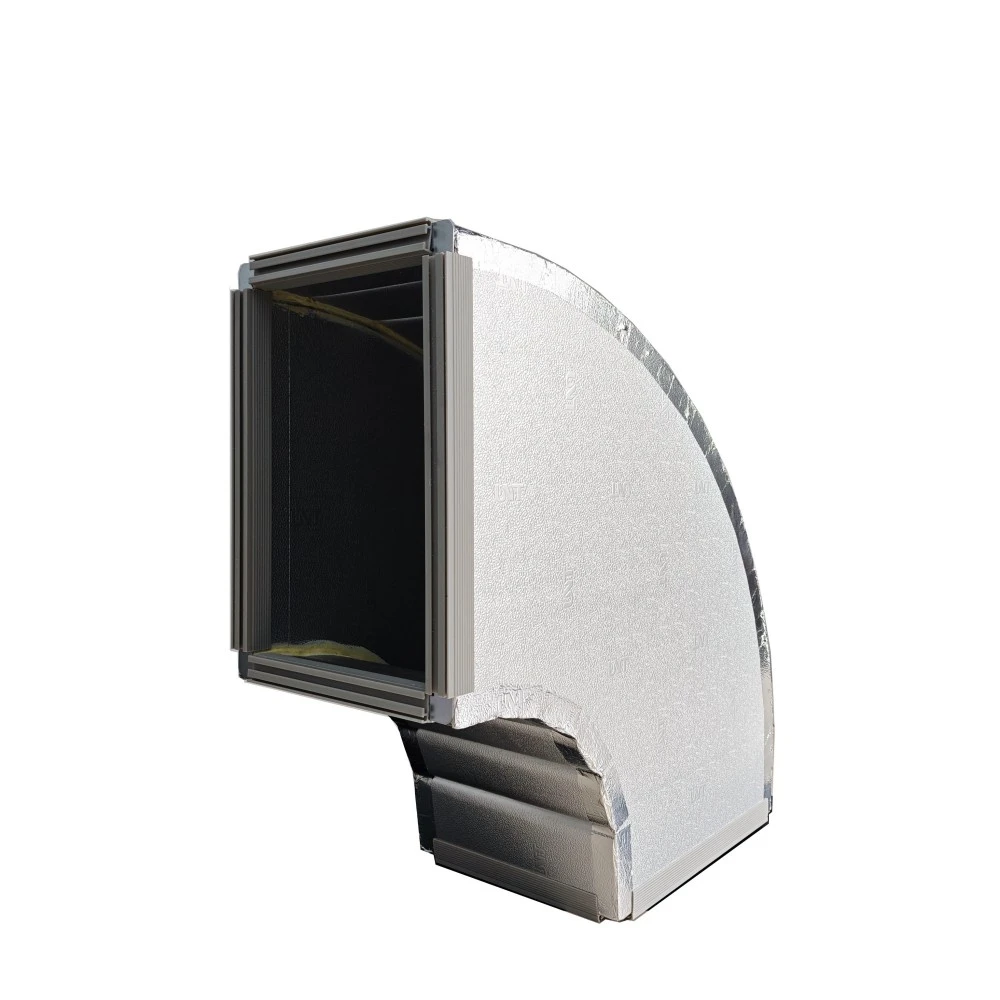
PIR Insulation Sheet is rigid closed‑cell polyisocyanurate foam board with composite facings. It delivers ultra‑low thermal conductivity, excellent fire‑retardant charring performance and low smoke emission. Light‑weight and dimension‑stable, it suits HVAC ducts, cold storage and building insulation for long‑term energy‑saving operation.
Structure: Silver Aluminum/ PIR Foam/ Silver Aluminum
Size: 4000*1200*20mm
Foam Density: 50-55kg/m3
Aluminum Thickness: 0.06mm or 0.08mm
Aluminum Color: Silver
Packing: 10 sheets/ package
Loading Capacity: 710 sheets/ 40'HQ (packed with plastic bags)
660 sheets/ 40'HQ (packed with cardboard box)
Chemical Underlying Logic of PIR Insulation Sheet

Many people simply understand PIR as a "fire-resistant improved version of PU". Essentially, it is two completely different polymer systems. PU relies on amine carbamate bonds, while PIR has an isocyanurate ring as its main framework. The thermal decomposition temperature of this cyclic bond is much higher than that of ordinary amine carbamate bonds. At high temperatures, it will not melt and flow rapidly, and when burning, a dense carbonized layer is formed on the surface, blocking the spread of flames inward and inhibiting the release of thick smoke, achieving the B1 fire-resistant effect. While ordinary PU can mostly only achieve B2 level.
At the same time, the 95%+ closed-cell structure allows gases to be locked inside the foam cells, achieving extremely low thermal conductivity. Without having to use extremely thick boards, a higher thermal resistance can be achieved. This is the fundamental reason why PIR boards can be made thin while maintaining the same level of insulation effect. However, the synthesis of this molecule is extremely sensitive to the formula ratio and reaction temperature.
Manufacturing Constraints of PIR Insulation Sheet
The production process of PIR is significantly more complex than that of PU. During the foaming stage, the material ratio, mold temperature, and line speed need to be strictly controlled. After foaming, it requires 24-48 hours of curing to allow the trimerization reaction to be fully completed. Then, it needs to be cut and processed.
If the factory shortens the curing time and directly cuts and ships the boards, the boards will experience shrinkage and warping in the later stage. Many projects have experienced board deformation, and the root cause is not the installation but the manufacturing process where the curing step is deliberately reduced. At the same time, the quality of the foil layer on the surface is also crucial. If the adhesion between the surface layer and the core material fails, water vapor will invade the foam cells, directly damaging the insulation performance. High-end PIR production lines have high automation levels, and the overall manufacturing cost is 15-25% higher than that of PU boards. This is also the core source of the price difference.

Engineering Implementation of PIR Insulation Sheet
The PIR sheet material itself has excellent performance, but improper on-site construction can directly ruin the product's performance. When cutting, if an ordinary utility knife is used, it will compress and damage the closed-cell structure of the cut, turning the cut into a water absorption channel. After water vapor seeps in, the local thermal conductivity will soar. The correct approach is to use a fine-tooth saw or a heat wire cutter to ensure the integrity of the cut cell structure.
Secondly, the aluminum foil surface layer is extremely prone to scratches. Once damaged, water vapor can directly enter the core material. Therefore, protective measures for the surface layer need to be taken during handling and laying. Additionally, the direction of the vapor barrier layer cannot be reversed. Incorrect laying will form a water vapor trap, causing continuous moisture accumulation inside the sheet and resulting in bulging and delamination over the long term. Many project failures are not due to product quality defects, but rather the loss of control over the detailed on-site processes.
Why choose UNTDuct

Project Case of UNTDuct

Specification
|
Item |
Unit |
Specification |
|
Standard Panel Size |
mm |
3950x1200x20 |
|
Alu. Foil Thickness |
mm |
0.06 or 0.08 |
|
Foam Density |
kg/m³ |
50-55 |
|
Fire Safety (BS476Part 6&7) |
|
Class 0 |
|
Thermal Conductivity |
W/(m·K) |
0.020 |
| Compressive Strength |
MPa |
0.2 |
|
Bending Strength |
MPa |
2 |
|
Water Absorption |
% |
0.36 |
|
Dimension Change |
% |
0.3 |
|
Working Temperature |
℃ |
-60 to +80 |
|
Max Pressure in duct |
Pa |
1500 |
|
Maximum Allowable Wind Velocity |
m/s |
≤15 |
|
Max Continuous Running Temperature |
℃ |
≤70 |
|
Lifespan of PIR Air Duct |
years |
>20 |
PRE-INSULATED DUCT vs G.I. DUCTWORK
|
Metric |
20mm PIR Pre - Insulated Duct |
0.5mm G.I Duct + 30mm Rubber Plastic (40-90kg/m3) |
|
Fire Safety |
Compliant (Class 0/BS 476, AS 1530.3). Self-extinguishing PIR core, low toxic smoke, non-combustible alu foil. |
G.I non-combustible; |
|
Thermal Insulation |
Excellent. |
Fair. |
|
Hygiene & Air Quality |
Superior. |
Poor. |
|
Lightweight |
1.4-1.5 kg/m². |
5.1–6.3 kg/m². |
|
Energy Efficiency |
Excellent. |
Low. |
|
Ease of Construction |
Easy. |
Complex. |
|
Quiet Operation |
Good. |
Fair. |
|
Space Savings |
Excellent. |
Poor. |
|
Environmental Friendliness |
Balanced. |
Low. |
|
Air Leakage |
Superior. |
Poor. |
Performance comparison based on UNT Duct product data and standard system configurations. Actual performance may vary depending on system design, installation method and project conditions.
How To Make PIR Pre-insulated Straight Duct

Step 1 - Tracing: outline the duct shapes on the panel.
Step 2 - Cutting: Using manual cutting tools, cut along the panel edges and create 90 degree "V" grooves on the panel.
Step 3 - Gluing: Apply glue to the cutting surfaces of the panels.
Step 4 - Folding: After the glue is cured, fold the sides toward each other to form the straight duct.
Step 5 - Taping: The tape is applied only to the external seams of the duct where the sides of the panel were joined for air-tightness.
Step 6 - Flanging: After applying glue and positioning the steel angle bracket, process to fit the PVC or aluminum invisible flanges.
Step 7 - Reinforcement: reinforce the duct with an aluminum reinforcement bar and G.I. Shaped disks, if necessary.
Step 8 - Sealing: After the duct is assembled, seal all internal joints hermetically with silicone.
Need the complete fabrication solution?
UNT Duct supplies PIR duct panels, fabrication tools, jointing accessories, reinforcement components and related materials for complete pre-insulated duct fabrication.
Hot Tags: pir insulation sheet, China, suppliers, manufacturers, factory, customized


