

Thanks to its excellent products and quality services, UNT Duct is one of the leading pir insulation ducting manufacturers and suppliers in China. Welcome to buy the high quality and customized products from our factory. We will offer you the best service and fast delivery.
PIR Insulation Ducting
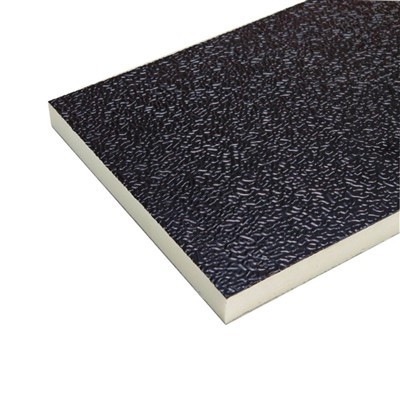
PIR Insulation Ducting deliver high-performance, environmentally sustainable air distribution for modern HVAC systems. Constructed as an integrated sandwich panel with aluminum foil facings and rigid PIR foam core, they outperform traditional galvanized steel ducts requiring on-site insulation. Featuring low energy loss and eco-friendly formulation, they support energy conservation and meet green building requirements. Ideal for hotels, office complexes, airports, hospitals and other commercial and public buildings.
What It's Made Of
The duct is a composite panel with a sandwich structure :
Core Material: The core is made of Polyisocyanurate (PIR) foam, a rigid, closed-cell thermosetting plastic . This is the core's key functional material.
Facings: The PIR foam core is bonded on both sides to a protective layer, typically aluminum foil, aluminum sheet, or pre-painted galvanized (GI) steel . The facings provide structural support and a vapor barrier.

Core material and insulation performance of PIR Insulation Ducting

The core base material of the prefabricated PI insulation air duct sheet is modified polyisocyanurate (PI) rigid foam. Different from conventional PU insulation materials, the molecular ring structure is dense, and the closed-cell rate can reach 93% to 96%. The measured thermal conductivity is 0.021 to 0.023 W/(m・K). Under normal temperature conditions of 23℃, the insulation effect of the same thickness is approximately 12% better than that of ordinary PU. A 25mm thick conventional sheet can meet the insulation specifications for central air conditioning supply ducts, and a 50mm specification is suitable for low-temperature fresh air and low-temperature process exhaust ducts.
The advantage of high-temperature resistance is prominent. The long-term continuous use temperature limit is 130℃, and the short-term peak heat resistance is 150℃. This eliminates the problems of foam shrinkage and delamination in high-temperature environments, and is suitable for high-temperature exhaust, kitchen exhaust, and composite air duct scenarios for cooking smoke, avoiding the drawbacks of high-temperature softening and failure of rubber and XPS.
Thermal Performance and Energy Efficiency of PIR Insulation Ducting
The core advantage is the extremely low thermal conductivity, λ = 0.018–0.02 W/m·K (20℃), which is significantly better than glass wool (λ ≈ 0.040), rock wool (λ ≈ 0.038), and ordinary PU (λ ≈ 0.023).
The thermal resistance of a 20mm board is approximately R ≈ 0.91 m²·K/W, meeting the insulation standards for most commercial buildings' HVAC systems; compared to traditional galvanized iron sheet + external insulation ductwork, the energy saving rate can reach 25%–30%, significantly reducing the load of the air conditioning unit and electricity consumption.
The closed-cell structure has an absorption rate of water < 1% (by volume), and the aluminum foil serves as a reliable vapor barrier, preventing condensation from the source and being suitable for humid regions.

Why choose UNTDuct

Project Case

Specification
|
Item |
Unit |
Specification |
|
Standard Panel Size |
mm |
3950x1200x20 |
|
Alu. Foil Thickness |
mm |
0.06 or 0.08 |
|
Foam Density |
kg/m³ |
50-55 |
|
Fire Safety (BS476Part 6&7) |
|
Class 0 |
|
Thermal Conductivity |
W/(m·K) |
0.020 |
| Compressive Strength |
MPa |
0.2 |
|
Bending Strength |
MPa |
2 |
|
Water Absorption |
% |
0.36 |
|
Dimension Change |
% |
0.3 |
|
Working Temperature |
℃ |
-60 to +80 |
|
Max Pressure in duct |
Pa |
1500 |
|
Maximum Allowable Wind Velocity |
m/s |
≤15 |
|
Max Continuous Running Temperature |
℃ |
≤70 |
|
Lifespan of PIR Air Duct |
years |
>20 |
PRE-INSULATED DUCT vs G.I. DUCTWORK
|
Metric |
20mm PIR Pre - Insulated Duct |
0.5mm G.I Duct + 30mm Rubber Plastic (40-90kg/m3) |
|
Fire Safety |
Compliant (Class 0/BS 476, AS 1530.3). Self-extinguishing PIR core, low toxic smoke, non-combustible alu foil. |
G.I non-combustible; |
|
Thermal Insulation |
Excellent. |
Fair. |
|
Hygiene & Air Quality |
Superior. |
Poor. |
|
Lightweight |
1.4-1.5 kg/m². |
5.1–6.3 kg/m². |
|
Energy Efficiency |
Excellent. |
Low. |
|
Ease of Construction |
Easy. |
Complex. |
|
Quiet Operation |
Good. |
Fair. |
|
Space Savings |
Excellent. |
Poor. |
|
Environmental Friendliness |
Balanced. |
Low. |
|
Air Leakage |
Superior. |
Poor. |
Performance comparison based on UNT Duct product data and standard system configurations. Actual performance may vary depending on system design, installation method and project conditions.
How To Make PIR Pre-insulated Straight Duct
Step 1 - Tracing: outline the duct shapes on the panel.
Step 2 - Cutting: Using manual cutting tools, cut along the panel edges and create 90 degree "V" grooves on the panel.
Step 3 - Gluing: Apply glue to the cutting surfaces of the panels.
Step 4 - Folding: After the glue is cured, fold the sides toward each other to form the straight duct.
Step 5 - Taping: The tape is applied only to the external seams of the duct where the sides of the panel were joined for air-tightness.
Step 6 - Flanging: After applying glue and positioning the steel angle bracket, process to fit the PVC or aluminum invisible flanges.
Step 7 - Reinforcement: reinforce the duct with an aluminum reinforcement bar and G.I. Shaped disks, if necessary.
Step 8 - Sealing: After the duct is assembled, seal all internal joints hermetically with silicone.
Need the complete fabrication solution?
UNT Duct supplies PIR duct panels, fabrication tools, jointing accessories, reinforcement components and related materials for complete pre-insulated duct fabrication.

Hot Tags: pir insulation ducting, China, suppliers, manufacturers, factory, customized