

Thanks to its excellent products and quality services, UNT Duct is one of the leading pir composite insulation foam duct manufacturers and suppliers in China. Welcome to buy the high quality and customized products from our factory. We will offer you the best service and fast delivery.
PIR Composite Insulation Foam Duct
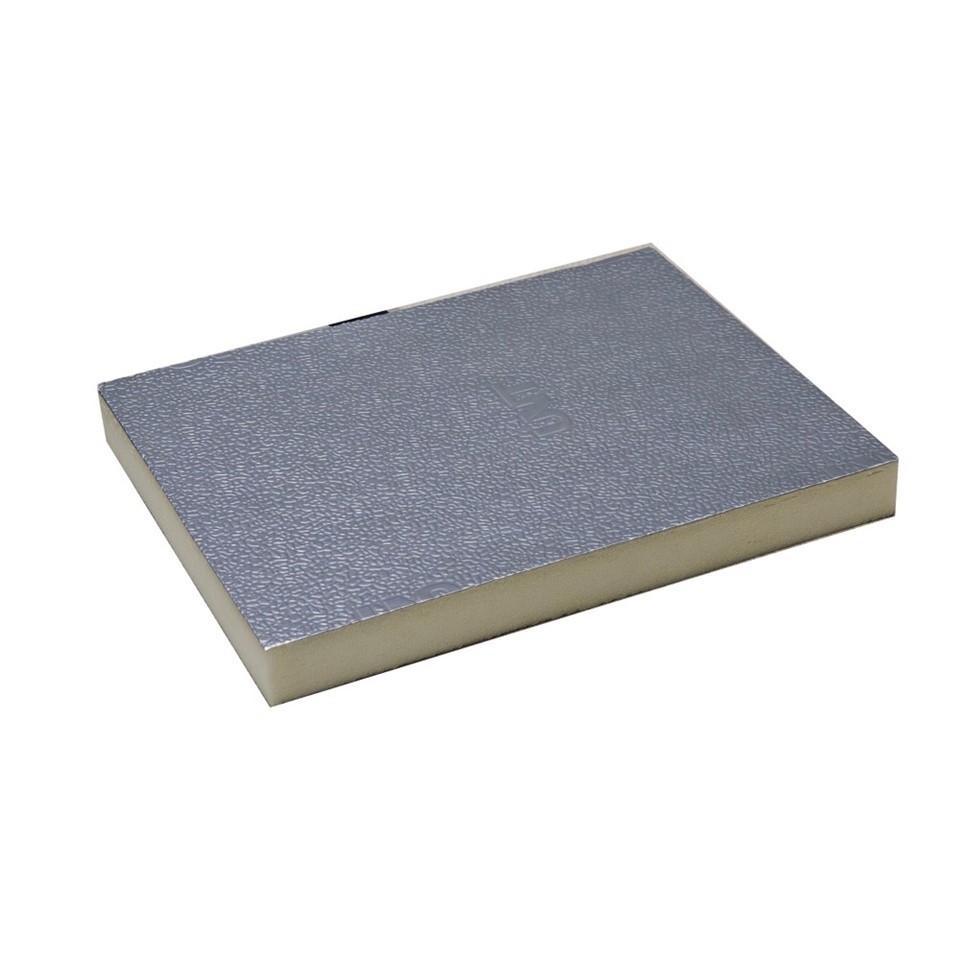
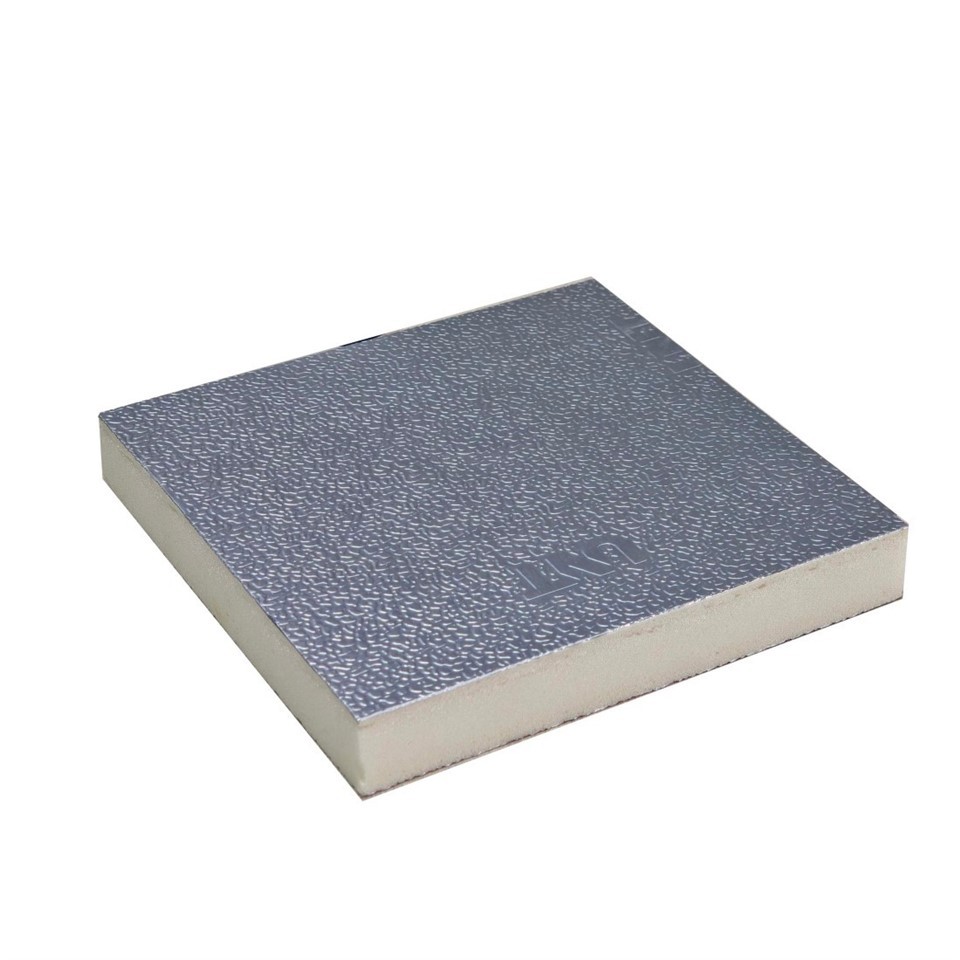
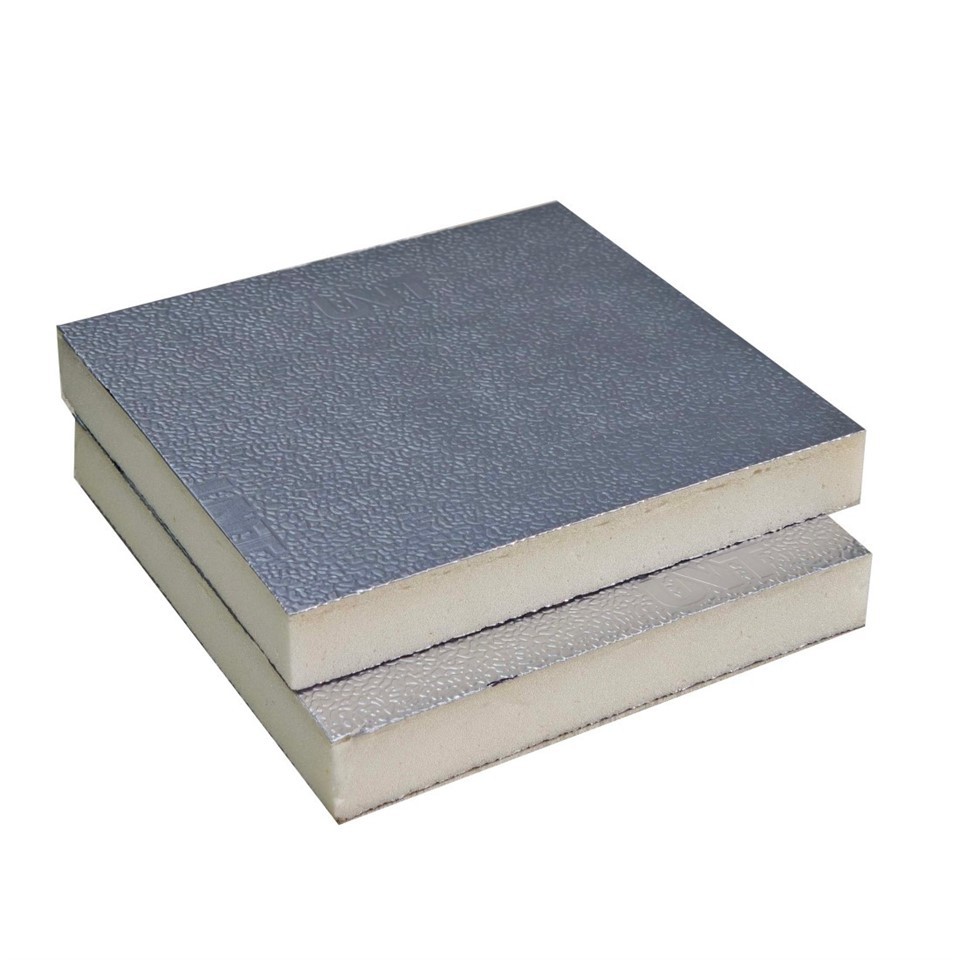
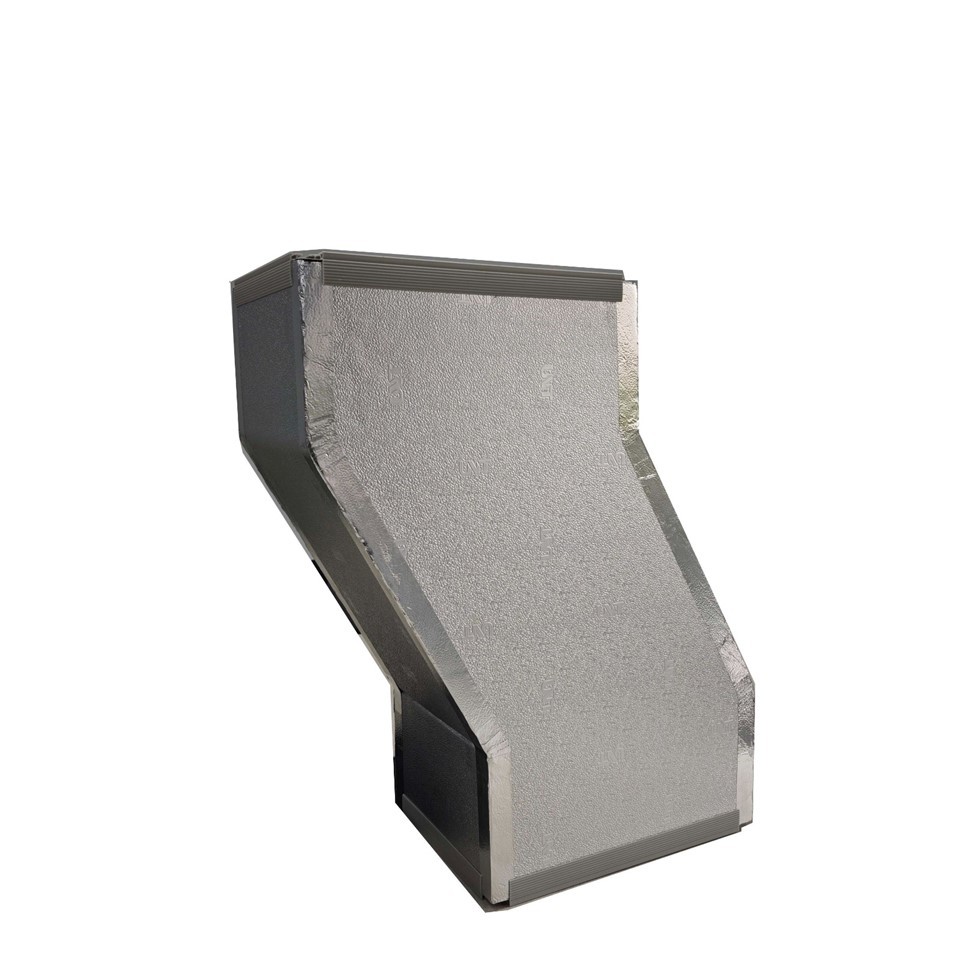
PIR Composite Insulation Foam Duct adopts rigid closed-cell PIR foam core with double-sided aluminum foil facing. It features ultra-low thermal conductivity, high fire resistance, light weight and air tightness, widely used in HVAC ventilation and energy-saving projects.
Structure: Silver Aluminum/ PIR Foam/ Silver Aluminum
Size: 3950*1200*20mm
Foam Density: 50-55kg/m3
Aluminum Thickness: 0.06mm or 0.08mm
Aluminum Color: Silver
Packing: 10 sheets/ package
Loading Capacity: 710 sheets/ 40'HQ (packed with plastic bags)
660 sheets/ 40'HQ (packed with cardboard box)

Thermal insulation and Fire safety of PIR Composite Insulation Foam Duct

Compared with traditional iron sheet air ducts, PIR integrated air ducts have no problem of insulation layer detachment or heat leakage through gaps, and the heat loss is significantly reduced; the high closed-cell structure prevents water vapor penetration, eliminates condensation and dripping on the pipe wall, and maintains long-term insulation performance without degradation, effectively reducing the energy consumption of air conditioning systems, and meeting the requirements of building energy conservation and low-carbon standards.
The PIR material has superior fire resistance performance compared to ordinary PU polyurethane foam. It does not drip or emit smoke when exposed to fire, and can effectively prevent the spread of fire. Combined with the A-level non-combustible protective surface layer, the overall fire resistance level meets both domestic and international fire safety standards, making it suitable for use in densely populated public places.
Galvanized Iron Steel Duct vs. PIR Pre-insulated Duct Foam Panel
|
Comparison Dimension |
Galvanized Iron Steel Duct (GI Duct, with External Insulation) |
PIR Pre-insulated Duct (PIR Composite Duct) |
PIR Advantage Explanation |
|
1. Thermal Conductivity (Core of Insulation) |
Rubber and plastic insulation: 0.047–0.054 W/m·KGlass wool: 0.054–0.070 Wm·K |
0.018–0.022 W/m·K (at 23℃) |
About 60%–70% lower, insulation efficiency doubled, almost no thermal bridge |
|
2. Surface Density (Weight) |
6–8 kg/m² (0.5mm steel sheet + 30mm insulation) |
1.4–1.5 kg/m² |
About 75%–80% lighter, significantly reducing building structural load |
|
3. Air Tightness (Air Leakage Rate) |
5%–10% (on-site sealing, many gaps) |
≤2% (factory precision tenon connection, aluminum foil airtight layer) |
Air leakage reduced by 60%–80%, fan energy consumption reduced by 15%–25% |
|
4. Installation Efficiency (Man-hours) |
Two-step construction: duct fabrication + external insulation; benchmark 100% |
Man-hours reduced by 40%–60%, one-step prefabricated installation |
No on-site insulation process, no need for professional sheet metal tools |
|
5. Total Thickness (Space Occupation) |
30–50mm (steel sheet + insulation + outer protection) |
20mm (integrated core material + aluminum foil surface layer) |
Saves 5–8cm ceiling space, suitable for narrow/renovation projects |
|
6. Noise Reduction Performance (Airflow Noise) |
Steel vibration + insulation gaps, noise reduction of 3–5dB |
PIR core absorbs 10–15dB, aluminum foil damping reduces vibration |
Built-in sound absorption effect, reducing the need for additional silencers |
|
7. Fire Rating |
Steel sheet is non-combustible (A1); rubber/plastic/glass wool is Class B1 |
Air duct is Class A1, core material is Class B1 (EN 13501-1) |
Forms a carbon layer when exposed to fire, no dripping, low smoke and non-toxic |
Highlighting PIR Composite Insulation Foam Duct Core Advantages
1. Ultimate Insulation, Energy Consumption Halved
GI Duct: Must be wrapped with 30–50mm rubber/plastic or glass wool, with high thermal conductivity and many thermal bridges, heat loss reaches 20%–30%.
PIR Duct: Core material thermal conductivity is 0.018–0.022 W/m·K, which is 1/2.5 of GI + rubber/plastic, no thermal bridges, heat loss < 2%.
Data Conclusion: 10,000m² duct saves 74,000–148,000 kWh of electricity annually, equivalent to about 70,000–150,000 yuan in electricity costs (1 yuan/kWh).
2. Ultra-light Weight, Structural Load Reduction
GI Duct: 6–8 kg/m², strengthened hangers and structural load-bearing are required for large-span/high-rise buildings.
PIR Duct: 1.4–1.5 kg/m², only 1/5 the weight of GI, hanger spacing can be increased, structural load reduced by 70%+.
Applicable Scenarios: High-rises, steel structures, old building renovations, projects with limited ceiling space have significant advantages.
3. Ultra-low Air Leakage, High System Efficiency
GI Duct: On-site crimping + sealant, large manual errors, air leakage 5%–10%, fans run at high load for a long time.
PIR Duct: Factory tenon groove + film integrated splicing, fully enclosed aluminum foil, air leakage ≤2%, fan energy consumption reduced by 15%–25%.
Standard Compliance: Meets the high-level air tightness requirements of EN 1507 and AS/NZS 3660.1.
4. Fast Installation, Labor Saving, Construction Period Shortened
GI Duct: On-site lofting → cutting → crimping → splicing → insulation wrapping → sealing, many processes, dependent on skilled workers.
PIR Duct: Factory prefabricated panels, on-site cutting → splicing → fixing, one-step completion, man-hours saved by 40%–60%, operable by ordinary workers.
Construction Period Comparison: 10,000m² duct takes 30 days for GI, while PIR completes in 12–18 days.
5. Ultra-thin Design, Maximum Space Utilization
GI Duct: 0.5mm steel sheet + 30mm insulation + outer protection, total thickness 35–50mm, sufficient ceiling height needs to be reserved.
PIR Duct: 20mm integrated thickness, space occupation reduced by 40%+ under the same air volume, suitable for narrow ceilings, mezzanines, clean rooms.
6. Built-in Sound Insulation, Comfort Upgrade
GI Duct: Metal pipe wall vibration + insulation gaps, airflow noise 50–60dB, additional silencers are required.
PIR Duct: PIR foam porous sound absorption, absorbing 10–15dB high-frequency noise, aluminum foil surface layer suppresses vibration, operating noise 35–45dB, no need for additional sound insulation equipment.
7. Fire Safety, Stable and Reliable
GI Duct: Steel sheet is Class A1, but external insulation (rubber/plastic/glass wool) shrinks, drips and smokes when exposed to fire, posing a fire spread risk.
PIR Duct: Aluminum foil surface layer is Class A1, core material is Class B1, forms a carbon layer on the surface when exposed to fire, no dripping, low smoke, non-toxic, blocks flame propagation, complying with GB 8624-2012 and EN 13501-1 standards.
8. Long Service Life, Maintenance-free, Cost-saving in Full Life Cycle
GI Duct: Insulation layer ages, gets damp and falls off in 5–8 years, requiring regular repair/replacement, overall renovation needed in 15 years.
PIR Duct: Closed-cell PIR is water-resistant, aging-resistant, non-delaminating and mold-resistant, aluminum foil surface layer is corrosion-resistant, service life 20–30 years, almost maintenance-free, full life cycle cost reduced by 30%+.
Hot Tags: pir composite insulation foam duct, China, suppliers, manufacturers, factory, customized


