

PIR Foam Pre-Insulated Duct: A Contractor-Focused Guide
For HVAC contractors, choosing ducting solutions that balance installation efficiency, long-term performance, and cost-effectiveness is critical to project success. Polyisocyanurate (PIR) Foam Pre-Insulated Ducts have emerged as a top choice for commercial, industrial, and high-performance residential projects-thanks to their superior insulation, durability, and ease of handling. Below is a comprehensive breakdown tailored to your workflow and client needs.
What is PIR Foam Pre-Insulated Duct?
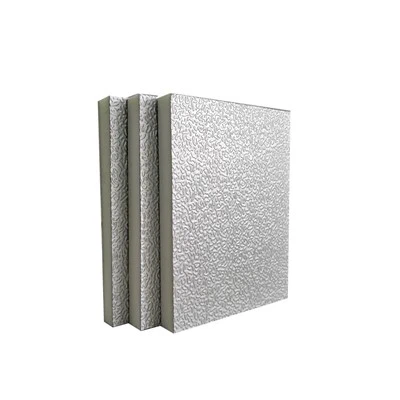
PIR Foam Pre-Insulated Duct is a factory-assembled duct system designed to replace traditional "sheet metal + separate insulation" setups. Its core structure is a sandwich panel consisting of three key layers:
Core Material: Rigid PIR foam, A closed-cell thermoset insulation material made by reacting polyols and isocyanates. Provides exceptional thermal resistance.
Inner Facing Material: Typically aluminum foil. Acts as a vapor barrier, air barrier, and structural reinforcement.
Outer Facing Material: Typically aluminum foil, galvanized steel, or pre-painted steel. Acts as a vapor barrier, air barrier, and structural reinforcement.
Key Advantages for Contractors (Why PIR Foam Pre-insulated Duct Beats Traditional Ducts)
Contractors often prioritize speed, reliability, and reduced callbacks. PIR pre-insulated ducts deliver on all fronts, with benefits that directly impact your project timeline and profitability:
A. Faster Installation & Labor Savings
Traditional ductwork requires separate steps: cutting sheet metal, fabricating ducts, installing insulation (e.g., fiberglass wrap), and sealing gaps. PIR pre-insulated ducts eliminate these redundancies:
Prefabricated components: Factory-cut panels/sections fit together with tongue-and-groove, flange, or clip-and-seal joints-no on-site insulation cutting or taping.
Lightweight: PIR foam is 70-80% lighter than sheet metal + fiberglass, reducing the need for heavy lifting equipment or additional structural supports.
Shorter timeline: Projects can be completed 30-50% faster than traditional ductwork, especially in tight spaces (e.g., ceilings, crawlspaces).
B. Superior Thermal Performance (Lower Client Operating Costs)
PIR foam has one of the lowest thermal conductivity among insulation materials for HVAC ducts:
Consistent insulation: No gaps, compression, or thermal bridging (a common flaw with field-installed insulation), which reduces energy loss by 20-30% for end-users.
Condensation resistance: The closed-cell foam core and vapor-tight facing prevent moisture buildup inside ducts, eliminating mold growth and corrosion-reducing your callback risk.
C. Durability & Low Maintenance
Structural rigidity: The foam core + metal facing resists dents, punctures, and deformation during installation and operation (unlike fiberglass, which sags or compresses over time).
Corrosion-proof: Aluminum or Aluzinc facings resist rust, even in high-humidity environments (e.g., hospitals, swimming pools).
Long lifespan: 20-30 years of service life with minimal maintenance, compared to 15-20 years for traditional sheet metal ducts (which require re-insulation or repairs).
D. Fire & Safety Compliance
PIR foam is engineered to meet global fire safety standards (critical for passing inspections):
Fire-retardant: Most PIR ducts are Class 1/Class 0 fire-rated (low flame spread, minimal smoke production) and self-extinguishing.
No toxic off-gassing: Unlike some polyurethane foams, PIR emits low levels of harmful fumes during a fire, complying with ASHRAE, UL, or EN standards.
E. Cost-Effectiveness (Total Cost of Ownership)
While upfront material costs may be 10-15% higher than traditional ducts, the total cost of ownership is lower:
Reduced labor costs (faster installation).
Lower energy bills for clients (reduced HVAC runtime).
Fewer repairs/replacements over time.
Common Applications (Where to Recommend It) of PIR Foam Pre-insulated Ducts
PIR pre-insulated ducts excel in projects where efficiency, space, and reliability are non-negotiable. Focus on these client segments:
Commercial buildings: Offices, shopping malls, hotels (requires quiet, efficient ductwork with minimal maintenance).
Healthcare facilities: Hospitals, clinics (needs mold-resistant, easy-to-clean ducts to meet hygiene standards).
Industrial settings: Data centers, cleanrooms (demands stable temperature control and low energy loss).
High-performance homes: Luxury residences or passive houses (requires superior insulation to meet energy codes).
Retrofits: Replacing old, inefficient ductwork in existing buildings (lightweight design minimizes disruption to structures).
|
Item |
Unit |
Specification |
|
Panel Structure |
|
Alu./PIR Foam/Alu. |
|
Standard Panel Size |
mm |
3950*1200*20 |
|
Alu. Foil Thickness |
mm |
0.06 or 0.08 |
|
PIR Foam Density |
kg/m3 |
55 |
|
Thermal Conductivity |
w/m.k |
0.022 |
|
Compressing Strength |
Mpa |
0.2 |
|
Bending Strength |
Mpa |
2 |
|
Water Absorption |
% |
0.36 |
|
Dimension Change |
% |
0.3 |
|
Working Temperature |
℃ |
-100 to +80 |
|
Maximum Allowable Wind Velocity |
m/s |
≤12 |
|
Continuous Running Maximum Temperature |
℃ |
≤70 |
|
Lifespan of PIR Pre-insulated Ductwork |
years |
>20 |
Hot Tags: pir foam pre-insulated duct, China, suppliers, manufacturers, factory, customized