


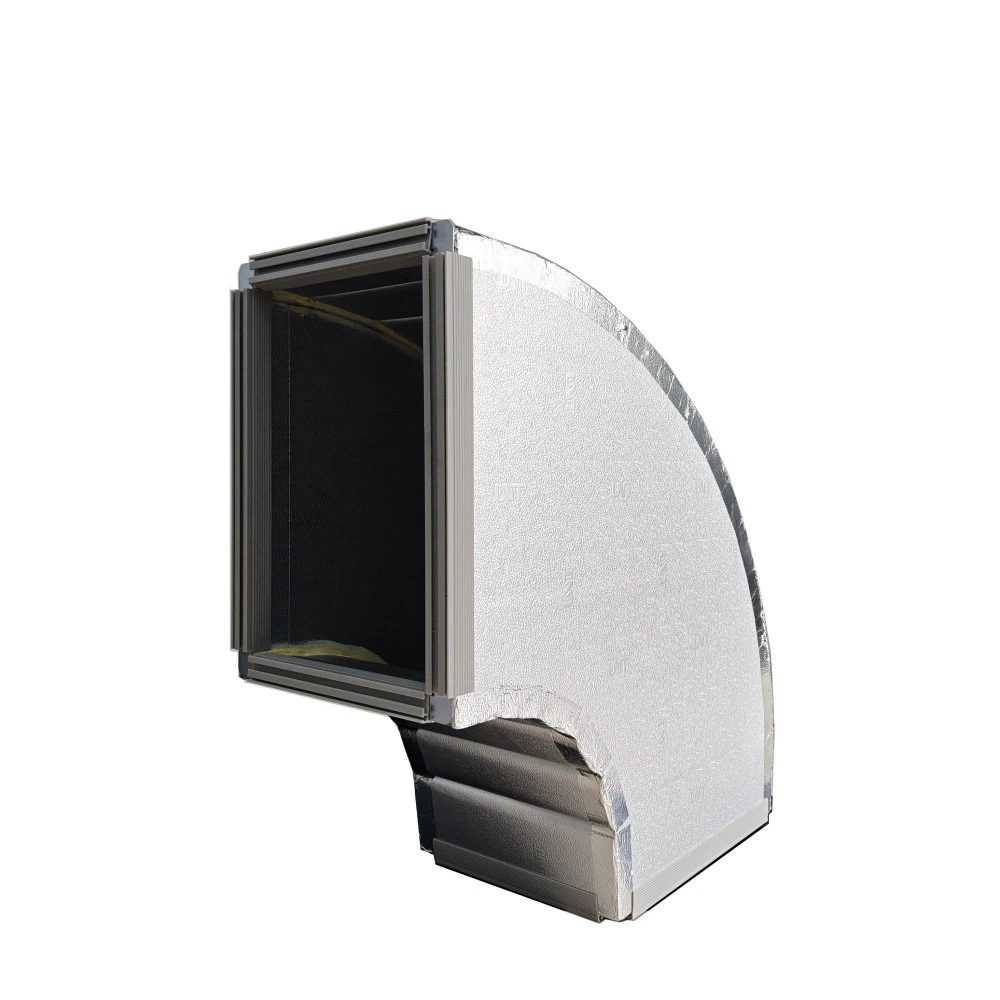
FAQs of Polyurethane Foam Duct Panel
Do PIR pre-insulated (PI) ducts require additional insulation after installation?
No. Unlike traditional steel ducts (which need separate insulation layers like fiberglass), PIR pre-insulated panels are factory-insulated with integrated facing. This eliminates the need for secondary insulation work, saving time and labor.
In which scenarios is PIR pre - insulated duct sheet suitable?
It is widely used in commercial buildings such as offices, shopping malls, and hotels, as well as in residential complexes, industrial facilities, healthcare and food processing facilities, and cold storage and refrigeration systems.
How is PIR pre - insulated duct sheet packaged?
-It is usually packaged in plastic film or cartons, with 10 sheets per package.
How to maintain PIR pre-insulated (PI) ducts?
Maintenance is minimal. Regular inspections for joint tightness (to prevent air leakage) and surface damage (e.g., punctures in aluminum facing) are recommended. Cleaning the inner surface periodically (with mild detergents) helps maintain airflow efficiency, especially in hygiene-sensitive areas.
How to make Air Ducts with Polyurethane Foam Duct Panel
The fabrication process of Polyurethane Foam Duct Panel

core advantages of Polyurethane Foam Duct Panel
Why Choose US ?

Excellent heat preservation efficiency
PIR foam features a finer closed-cell structure and has an extremely low thermal conductivity, one of the lowest among all common insulation materials. This means that it can extremely effectively prevent the cold/hot air inside the pipeline from exchanging heat with the external environment.

Outstanding fire safety performance
PIR material has natural flame retardancy. When exposed to fire, its surface will rapidly carbonize and form a dense protective layer of coke. This protective layer can effectively prevent the further penetration and spread of flames, and has a low smoke emission.

Excellent moisture-proof and water vapor penetration resistance
The closed-cell rate of PIR is extremely high (usually over 95%), which means that moisture and water vapor have difficulty penetrating into the material's interior, ensuring that the insulation performance does not significantly decline due to moisture absorption. This is particularly important in a humid environment.
Structure and Composition of Polyurethane Foam Duct Panel

Core Material: Rigid polyurethane (PU) foam with a closed-cell structure, offering low thermal conductivity (0.018–0.025 W/m·K). with 50 kg/m³ being common for duct applications.
Surface Layers: Reinforced with aluminum foil (60–80 microns) on both sides, providing corrosion resistance, moisture protection, and a smooth finish for low air resistance.
Integrated Design: Factory-manufactured as pre-insulated panels, eliminating the need for on-site insulation installation and reducing labor costs.
Key Properties of Polyurethane Foam Duct Panel

Thermal Efficiency: The lowest thermal conductivity among common duct materials, enabling thinner insulation (e.g., 20–40 mm) compared to glass wool or phenolic foam. This reduces energy loss by up to 50% compared to traditional galvanized steel ducts.
Lightweight: Weighs 72% less than galvanized steel, making it ideal for retrofitting projects with structural load constraints.
Air Tightness: Factory-sealed joints and smooth surfaces minimize air leakage, improving system efficiency and reducing fan energy consumption.
Durability: UV-resistant aluminum foil and closed-cell foam ensure a service life of over 20 years, even in humid environments.
Hygiene: Smooth aluminum surfaces inhibit bacterial growth, meeting standards for food processing, pharmaceuticals, and hospitals.
Hot Tags: Polyurethane Foam Duct Panel, China, suppliers, manufacturers, factory, customized


