


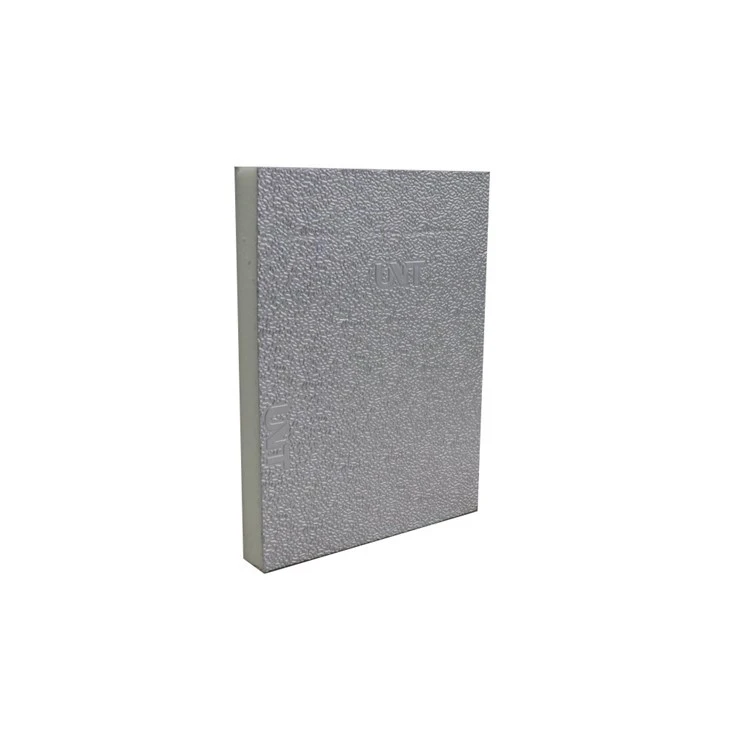


PIR foam board Material Properties
1. Chemical Composition
Main raw materials: isocyanate and polyether. Forms a highly cross-linked structure with isocyanurate rings via foaming, with closed-cell rate >90%. Features: smooth surface, easy processability, light weight, oil & chemical resistance.
2. Physical Properties
Temperature Resistance: 80℃ (normal); -100℃ (extreme environments);
Thermal Conductivity: As low as 0.02–0.022 W/(m·K), better insulation at low temperatures;
Mechanical Strength: Compressive strength ≥200kPa, flexural strength ≥370kPa (suitable for floor heating, roof load-bearing layers);
Fire Rating: BS 476 Part6&7 Class0 ASTM E-84Class A
3. Durability
Strong aging resistance; moisture permeability coefficient ≤3.34 Ng/(Pa·m·s), water absorption 0.36%, ensuring long-term moisture resistance and stability.
Core Advantages of PIR Foam Boards in HVAC Applications
Breakthrough in Thermal Performance
With an ultra-low thermal conductivity of 0.021 W/(m·K), it achieves over 25% higher energy efficiency compared to traditional polyurethane materials. Its closed-cell rate exceeding 90% effectively blocks cold bridge formation, making it suitable for insulation needs of 4℃ chilled water pipes and 10℃ low-temperature air supply systems.
Upgrade in Fire Safety
Leveraging the highly cross-linked structure of polyisocyanurate rings, it has an oxygen index ≥ 32, meeting the GB8624 B1-class standard. When air ducts pass through fire compartments, it can delay fire spread for 45 minutes, significantly exceeding the 20-minute limit of ordinary polyurethane materials.
Adaptability in Mechanical Performance
Standard density air duct boards (50-55kg/m³) reach a compressive strength of 220kPa, capable of withstanding wind pressure impacts at 30m/s wind speed. Aluminum foil composite models simultaneously offer moisture resistance (water absorption rate < 0.5%) and corrosion resistance.

Common Problem
How does the insulation performance of PU pre-insulated ducts compare to traditional ducts?
PU foam has extremely low thermal conductivity (around 0.020 W/m·K), far better than traditional materials like galvanized steel (which requires additional insulation layers). This means PU pre-insulated ducts reduce heat loss/gain more effectively, improving energy efficiency and lowering HVAC operating costs.
How long is the service life of PU pre-insulated air duct panels?
With proper installation, maintenance, and protection from physical damage or extreme conditions, PU pre-insulated ducts can last 20+ years. Their durability depends on factors like environmental humidity, exposure to chemicals, and structural support.
Are PU pre-insulated ducts lightweight? How does this affect installation?
Yes, they are significantly lighter than traditional galvanized steel ducts (up to 72% lighter). This reduces structural load on buildings (critical for retrofits or weak ceilings) and simplifies installation-panels can be cut, assembled, and fixed quickly without heavy lifting equipment, shortening construction time.
Can PU pre-insulated ducts be customized for specific project needs?
Absolutely. Manufacturers offer customization in terms of panel thickness (e.g., 20mm to 50mm, based on insulation requirements), size (length, width), and facing materials (e.g., different grades of aluminum for corrosion resistance).
How to make PU Pre-insulated Air Ducts
The fabrication process of Pre-insulated Air Ducts


Hot Tags: pir foam board, China, suppliers, manufacturers, factory, customized


